
Straight Grinding Wheels
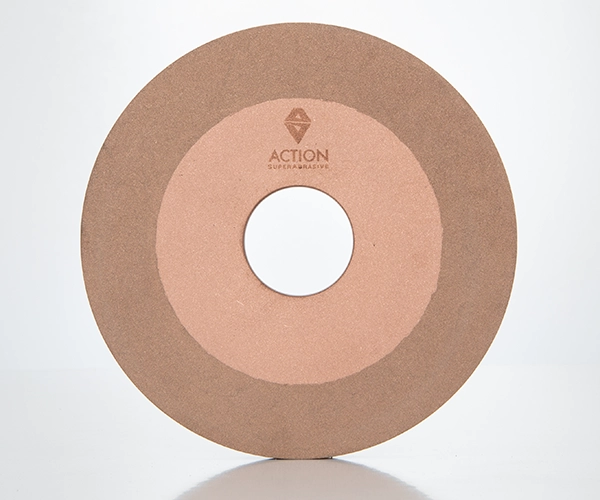
Straight grinding wheels, also known as Type 1 grinding wheels, are among the most common and versatile wheel shapes used in metalworking, fabrication, and maintenance operations.
Featuring a flat, uniform profile with no recess, these wheels are primarily designed for peripheral grinding, meaning the outer edge of the wheel performs the grinding work.
Action Super Abrasive offers a comprehensive range of straight grinding wheels engineered to provide precision, durability, and consistent stock removal across a variety of materials and applications.
Action Super Abrasive offers a comprehensive range of straight grinding wheels engineered to provide precision, durability, and consistent stock removal across a variety of materials and applications.
Each wheel is manufactured to tight tolerances using premium abrasive grains and bonding agents, ensuring reliable performance, extended wheel life, and superior surface finishes even in high-volume production environments.
Whether you need a standard specification for everyday shop use or a custom-engineered solution for a specialized application, our team has the technical expertise to help you find the right wheel for the job — backed by responsive service and fast turnaround.
Common Applications
Surface Grinding
Used to produce flat, precise finishes on metal components and workpieces.
Cylindrical Grinding
Used to shape, size, and finish round or cylindrical workpieces.
Tool and Cutter Grinding
Suitable for sharpening, reconditioning, and maintaining cutting tools.
Bench and Pedestal Grinding
Commonly used for deburring, sharpening, shaping, and general shop maintenance.
Snagging
Used to remove heavy amounts of excess material from castings, welds, and forgings.
Precision Finishing
Helps achieve tight dimensional tolerances and controlled finishes on hardened steel, tool steel, and other metals.
Why Choose Action Super Abrasive Straight Grinding Wheels?
Thermal Stability
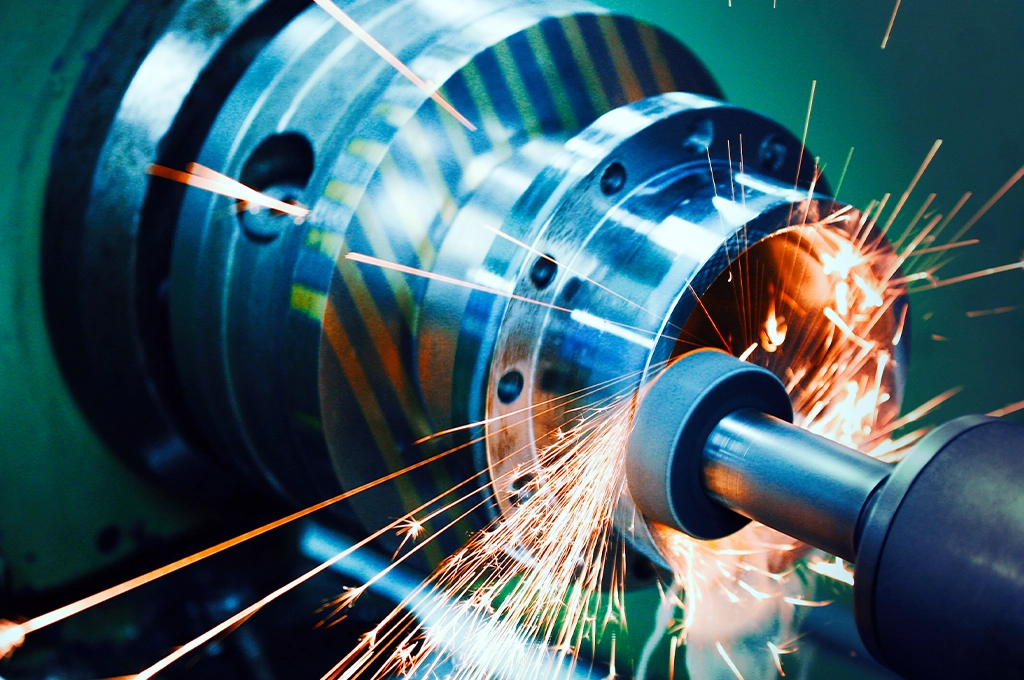
CBN maintains hardness at high temperatures, reducing burn risk and preserving metallurgical integrity.
Extended Wheel Life
Superabrasive grains fracture less frequently, resulting in longer intervals between dressing and fewer wheel changes.
Improved Surface Finish
Uniform grain structure and controlled bond systems allow for finer finishes and better size control.
Higher Productivity
Faster material removal rates and reduced downtime support greater throughput.
Best-in-Class Grinding Wheels, Designed to Meet Your Needs
At Action SuperAbrasive, we offer superior design, craftsmanship, formulation, and
customer service. As an ISO 9001 Certified company, we provide our customers with the
tailor-made solutions they require to excel.
Key Specifications to Consider
When selecting a straight grinding wheel, match the wheel specifications to the grinding machine, workpiece material, and intended application.
Wheel Diameter
- The wheel diameter must be compatible with the grinder’s guard, spindle, and operating capacity.
- Never install a grinding wheel that is larger than the machine is designed to accommodate.
Wheel Thickness
- Wheel thickness affects the width of the grinding path, stock-removal capacity, durability, and overall wheel life.
Arbor or Bore Size
- The wheel’s center opening must properly match the spindle or arbor of the grinding machine.
Approved bushings may be used when permitted by the wheel and machine manufacturers.
Grit Size
- Coarse grits are generally used for aggressive stock removal, while finer grits are used for smoother finishes and precision grinding.
Grade or Hardness
- The wheel grade determines how firmly the bond holds the abrasive grains.
Softer grades release worn grains more quickly and are generally suitable for harder workpiece materials. Harder grades retain grains longer and may be more appropriate for softer materials.
Maximum Operating Speed
- Always verify that the wheel’s maximum rated revolutions per minute, or RPM, is equal to or greater than the machine’s spindle speed.
Need Help Choosing the Right Wheel?
Not Sure Which Straight Grinding Wheel Is Right for Your Job?
Our team can help you match the correct grit, bond, and specification to your machine and material. Contact Action Super Abrasive for expert guidance and fast quotes.